Work backwards from the burger on your menu. Decide the eating experience you want, then discuss fat content, grind and raw patty weight with your butcher. Category names on a pack do not settle the blend on their own, so ask what is in the product. A short tasting with your own bun and toppings will tell you more than a label.
Start with the burger you want to sell
A burger blend is a menu decision before it is a purchasing one. Write down what you are aiming for: a pub-style patty that holds up under a pile of toppings, a thinner patty built for a stacked double, or a chunky handmade look for a weekend special. Each of those asks something different from the mince.
It also helps to be honest about the kitchen. A café cooking to order through a short lunch rush needs a patty that behaves the same way every time. A kitchen forming two hundred patties for a function has different priorities again. Tell us how the burger is cooked, held and served, and the conversation about the blend gets a lot shorter.
Why the label alone will not choose your blend
Retail mince names are a handy shorthand, but they’re not a specification. Meat & Livestock Australia’s guide to beef mince makes the point that retail category names don’t set one universal fat level, and that the sensible move is to check the product information or ask the butcher. That guide also puts burgers among the dishes suited to a mid-range mince carrying some fat. It describes an Australian retail market, so treat it as general background rather than a New Zealand specification.
For a trade order, the useful questions are simply what the mince is made from, how it’s ground, and what fat level the product is made to. Ask those directly rather than reading them off a name, and keep the answers with your other product records.
Grind, mixing and the texture you are after
Describe the texture you want before choosing a grind. Do you want a visible, coarser texture or a smoother patty? Ask which grind options are available, then compare them using the same raw weight, forming method and finished burger. That gives the butcher a clear brief and your kitchen a fair comparison.
Keep the forming method consistent too. Meat & Livestock Australia’s mince preparation guide suggests shaping loosely enough to hold together without compressing the mixture. Agree how your team forms patties and use that method across shifts. If you would prefer more preparation completed before delivery, raise that with us.
Patty weight, bun fit and the rest of the plate
Decide raw patty weight and diameter together, then check them against the bun you actually buy. A patty that shrinks back inside the bun looks mean even when the weight is right, and one that overhangs badly makes the burger awkward to eat. Measure a formed patty against your bun before you settle the specification, not after the first delivery arrives.
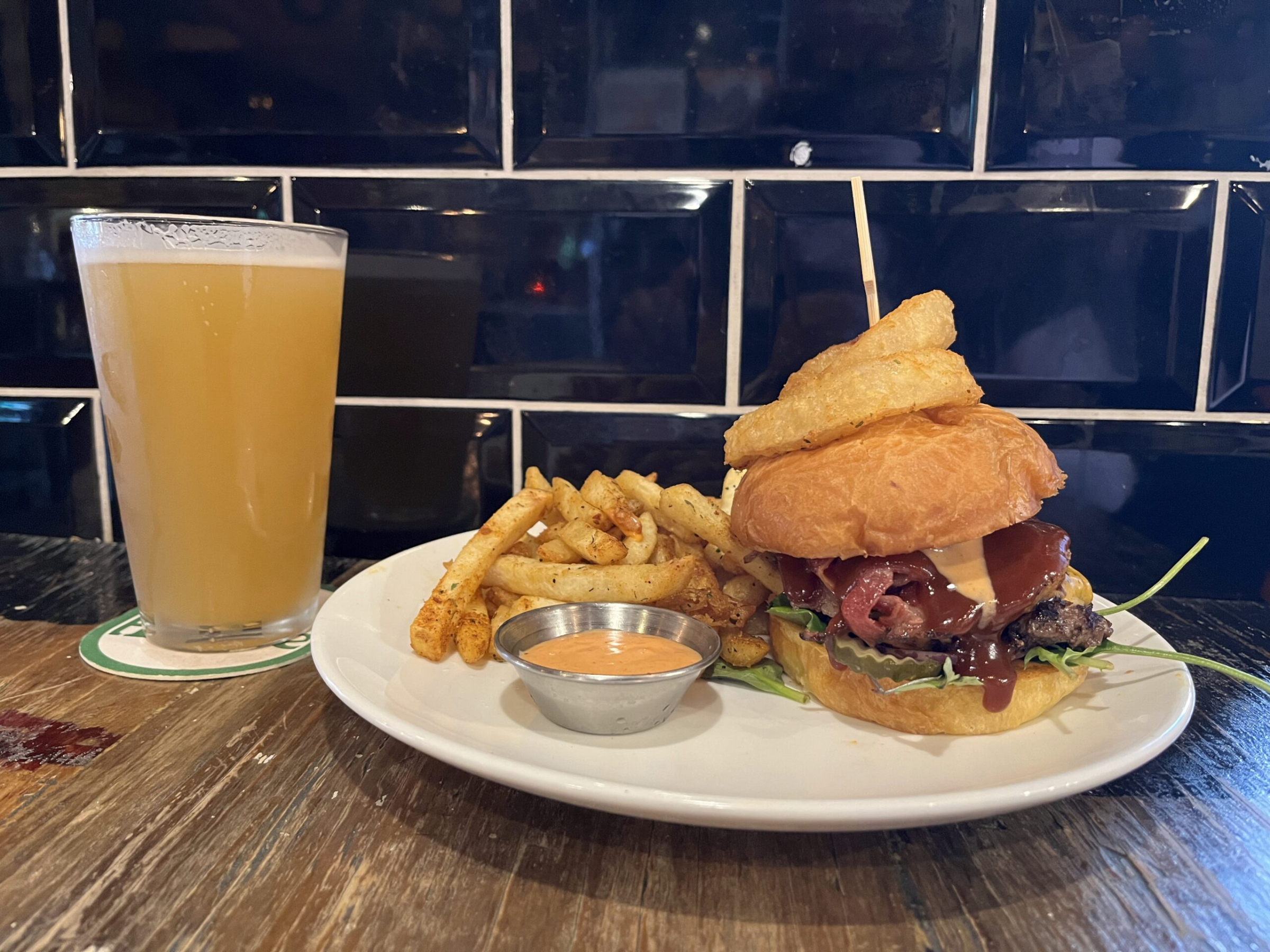
Then taste the assembled burger rather than the patty on its own. Sauce, cheese, pickles, bacon and a toasted bun all push the flavour around. A blend that seems mild by itself can be exactly right once the burger is built, and a rich one can disappear under a heavy sauce.
A worksheet for specifying and tasting your blend
Fill this in once, keep it with your ordering notes, and repeat the tasting whenever you change the burger or the bun.
Burger blend specification and tasting worksheet
Scroll sideways to compare →
Burger blend specification and tasting worksheet
Record
What to note
Menu item and service style
The burger, how it is cooked and whether patties are made to order or in advance.
Fat level
The fat level the product is made to, described in the order rather than assumed from a name.
Grind
Coarse, fine or a combination, and whether it is a single or double grind.
Raw patty weight and diameter
Your target weight, the diameter you want and the variation your menu can live with.
Forming and handling
Who forms patties, what they use, and how much the mince is worked.
Pack format and storage
Pack weight, whether it suits your fridge or freezer space, and how it is opened during service.
Tasting notes
How the blend eats in the finished burger, with the bun and toppings you serve.
Consistency check
Weigh a sample of patties each service for a week and note the spread.
Talk to our butchers about the blend
At Preston Foods, our experienced butchers and specialised machinery let us prepare mince blends and burger patties to your specification. Describe the burger, your expected weekly quantities and the bun you use, and we’ll work through the options with you. You can also see what we produce across the rest of the range.
Describe the burger, then ask about the fat level the product is made to, the grind, the pack format and whether formed patties are an option. If patty consistency matters, include your target raw weight and diameter. Put it in writing so the kitchen and the butcher are working from the same description.
Not automatically. The fat level is one part of the eating experience, alongside your recipe, grind and preparation. Ask what the product is made to, then judge it in the burger you actually serve. There is no single blend that suits every menu.
Write down the raw weight, the diameter and how the mince should be handled, then use a scale or a portioner rather than eye. Weigh a few patties during service and note the spread. If consistency is still an issue, talk to us about having patties formed to your specification instead.