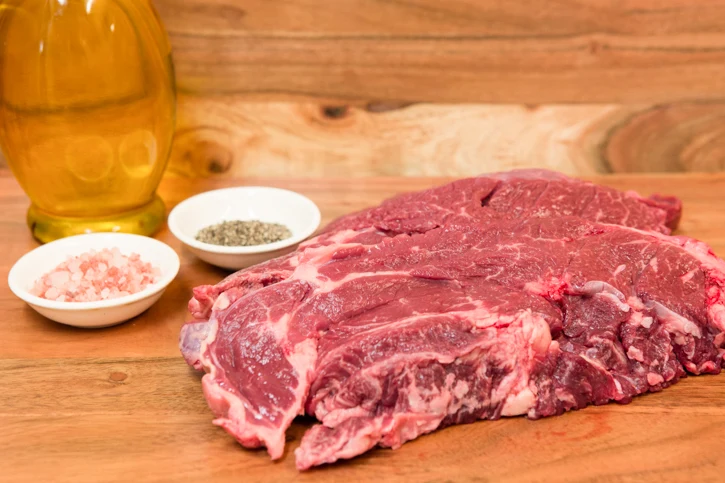
Chuck, blade and brisket all turn up in braises, pie fillings and pulled beef, but they aren't interchangeable. Choose on the finished texture you want, the dice or trim format your kitchen can use, and the batch size your equipment can handle. Confirm the cut and preparation with your butcher, then measure your own usable yield.
Start from the dish, not the cut list
Slow cooking covers a lot of ground. A pie filling wants pieces that stay defined in a thick gravy. A braise served as a main wants something that looks generous on the plate. Pulled beef wants a cut you can break down and portion by weight once it’s cooked. Decide which of those you’re making first. The cut follows from that.
Brisket, topside, chuck and blade steak are the usual starting points, and New World’s slow-cooked beef recipe lists all four among its options for slow cooking. Put those in front of your butcher. The call after that is yours, because the same cut can behave quite differently depending on how it’s broken down and cooked.
Chuck, blade and brisket side by side
Treat this as a conversation starter rather than a rule. Your method, your sauce and your service style all shift the answer.
Slow-cooking beef cuts and the questions to ask about each
Scroll sideways to compare →
Slow-cooking beef cuts and the questions to ask about each
Cut
Menu directions to consider
Ask before you order
Chuck
Braises, curries, casseroles and pie fillings where you want defined pieces sitting in a sauce.
Dice size, trim level, and whether you want it diced for you or supplied whole for your own breakdown.
Blade and cross cut blade
Braised and shredded dishes; compare how the preparation and trim suit your intended portion.
How the cut is presented, the piece or portion size, and the pack format your fridge can take.
Brisket
Long braises, pulled beef and sliced service, where one larger piece suits batch cooking and carving.
Format and availability. For brisket, tell our team the dish and preparation you have in mind.
Two kitchens can order the same cut and be disappointed for opposite reasons, usually because nobody wrote down the format. Decide whether you want a dice, a strip, a whole piece or a portion, and say what size. Tell us how much fat and sinew you want left on, because that changes both the eating quality and the work your team does at the bench.
Name the person responsible for the specification too. If your head chef sets it, make sure whoever places the weekly order has a copy, and let us know when it changes.
Check the batch against your equipment
Slow-cooked dishes are usually made in batches, so the limit is often the pot, the tilt pan or the oven rather than the cut. Work out how much raw weight fits one batch with room to move, and how many batches a shift can turn out alongside everything else.
Beef + Lamb New Zealand’s guide to scaling a recipe makes the general planning point that equipment capacity and batch size need checking, because larger volumes can behave differently to smaller ones. Worth remembering when a dish moves from a weekly special to a function menu.
Measure what your kitchen actually gets out of it
Track how many usable portions your kitchen gets from each batch. Weigh what arrives, weigh it again after trimming, weigh the cooked yield, then count the serves. Do that across several batches and use the range for planning and costing.
Record the prep time alongside it. A cut that needs more bench work can still be the right call if it gives you the dish you want, but you want that trade-off in front of you. Our guide to whole cuts and portion-cut steaks works through the same comparison in more detail.
Tell us how the dish is made
Our butchers have been breaking down beef for New Zealand kitchens for a long time, and the more we know about the dish, the more useful the advice. Tell us what you’re cooking, the batch sizes you work in and the texture you’re chasing, and we can talk through the cuts and preparation that might suit. Have a look at what we produce before you get in touch.
Often you can, but don't assume the result will be identical. The two cuts carry fat and connective tissue differently, which shows up in the finished texture and in the trimming your team does. Run one batch on the new cut, record the yield and portion count, and taste it before you change the standing order.
Think about where you want the work done. Beef butchered to an agreed dice size can cut bench time. Whole pieces let your chef set the size and trim, and suit dishes cooked as larger pieces. Weigh up format, labour and finished portion together before you order.
Quote both on the same weight basis and the same preparation, then measure your own trimmed and cooked yield and count the serves from each. Add the bench time. A price per kilogram only means something once you know how many portions your kitchen gets out of it.